Tag Archives: stock market forecasting

Andrew Ross Sorkin on Evangeline Adams

Andrew Ross Sorkin, author of the bestselling book Too Big to Fail, takes on the great stock market crash in 1929.  But in his thumbnail sketches of Evangeline Adams and astrology, his research skills completely fail him.
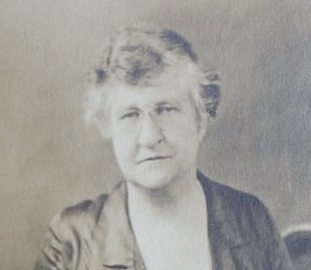
In his introduction, Sorkin claims “more than eight years reporting and thousands of hours of research.”  He’s been writing for the New York Times since high school, has a show on CNBC and edits a financial news service.  But when it comes to Adams and astrology, all he can do is regurgitate questionable bits from a nearly 50-year-old book.  You can’t track down every fact, but the rumors and innuendos are perpetuated.

Astrology is the colorful, sexy subject that many want to laugh at.  Adams is mentioned in over a half dozen online reviews of Sorkin’s book, yet she only plays a tiny role in it.  She was probably included in the press release as a fascinating part of the history.  Sorkin himself compares horoscopes to fortune cookies in an interview, seemingly only aware of Sun sign astrology.

Of course, Andrew Ross Sorkin is an over-achiever who probably had assistants compile much of the information in 1929.  The few short parts on Adams are all directly from The Day the Bubble Burst, a 1979 book about the crash.  In order to look like they did more research on Adams, Sorkin also cites Maury Klein’s 2003 book The Crash of 1929.  But academic Klein also swiped the same skewed anecdotes directly from Bubble Burst.

In both, Evangeline Adams is a regular at the Plaza Hotel dining room, where she “had her own reserved table… surrounded by several star struck young men.”  On September 2, 1929, she predicted on a radio show that “the Dow Jones could climb to heaven,” which it obligingly did.

On Black Thursday, October 24, 1929, Adams held a group session in her office for worried clients, telling them that things were looking up.  She then supposedly contacted her broker, who said she’d lost $100,000 on the market, and told them to sell it all ASAP.

I could verify none of these stories, and much sounded bogus to me.  (Evangeline said she ate lunch at her desk; she was a workaholic with the Moon in the 6th house.)  The original authors gave no specific source notes and were clearly biased against Adams from the start.  Sorkin repeats the same prejudice.  Evangeline made a great forecast, but cared nothing for her clients as long as she could profit from their loss.  The astrologer as charlatan and fraudster is such a tired trope.  How would anyone know how much she had or when she sold?  I don’t even think she owned stocks; she always said her chart was unlucky for speculation (with Cancer on the 5th house and the Moon in the 6th opposite the Sun).

I shouldn’t complain.  Of the 100+ people on Sorkin’s cast of characters list, Evangeline Adams, “astrologist known as the stock market’s seer” (another attribution I could never confirm), is the only woman portrayed in 1929’s exclusive men’s club.

Sorkin, interestingly enough, has the Sun and Moon in Pisces and Mercury and Mars in Aquarius, signs he shares with Adams.  They helped him create a varied and comprehensive story.  His T-square of Mercury conjunct Mars opposite Saturn in Leo and square Uranus in Scorpio has clearly made market crashes a preoccupation.
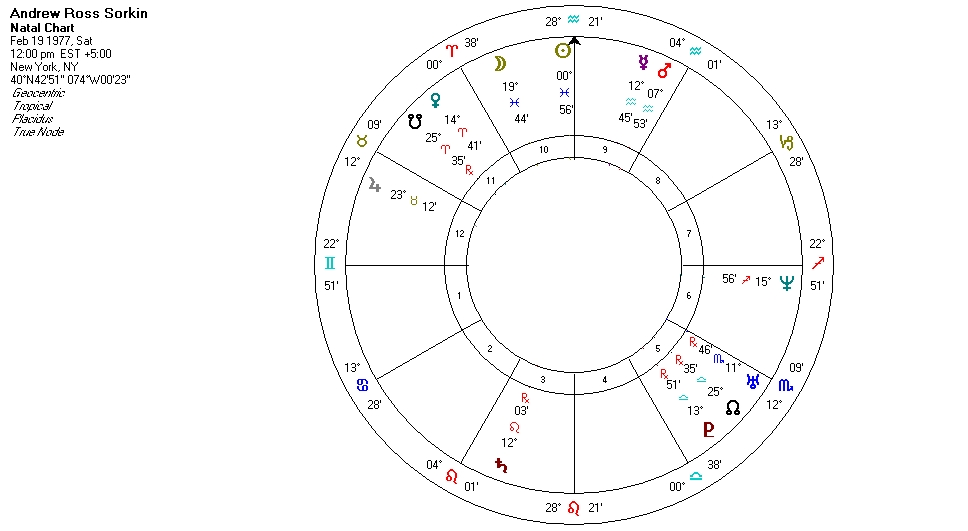
Yet with a grand trine of Venus, Saturn and Neptune, Andrew Ross Sorkin will likely continue on his merrily ignorant way.  Until, of course, the calamitous day there’s a sudden major reversal he can’t explain, leaving him crushed and in need of direction, and ignorant of what astrology could do to help.

Astrologers won’t find anything enlightening on Evangeline Adams or astrology in 1929.  The many other character profiles might help understand their individual horoscopes.  Reviewers compliment the writing, but I personally wonder how such a seemingly intelligent man can be so oblivious to a subject that has become standard in market forecasting.  In this astrologer’s opinion, 1929 is a missed opportunity.

Sorkin’s birth information is from Wikipedia.  We have no time of birth.

For the real story on Evangeline Adams, read my books, Foreseeing the Future and What Evangeline Adams Knew.
Astro Speculation on Wall St.

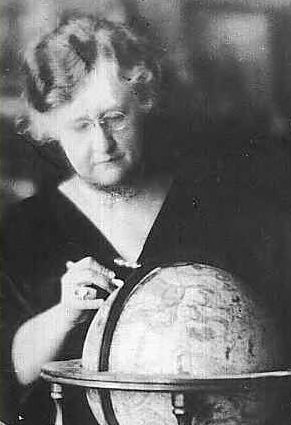
Evangeline Adams’ 1927 autobiography revealed her personal association with financiers like J. Pierpont Morgan and Thomas W. Lawson. She said she could forecast the swings of the market and advise when individuals should invest. In “Astrological Speculation on Wall Street,” Carrie Tirado Bramen explains how Adams shared similar messages with the financial forecasters of her day. Prediction involved both a logical analysis as well as metaphysical hunches or astrological insight.

Bramen presents a fascinating history. The word speculation was first used by Scottish economist Adam Smith in 1791, and like the word consider, “was originally about contemplating celestial matters.” Financial advice literature in Adams’ day sought to separate speculation from gambling by emphasizing rationality, analysis and calculations. They even used charts.

Aquarian Evangeline also tried to normalize her practice, stressing her knowledge, authority and skill. She, too, had great expertise, analyzed data, and presented it in chart form. And yet neither could escape the fact that both also relied on something beyond ordinary rationality: the intuition or impressions.

Bramen asks the question “Who has the authority to predict the future?” Adams agreed with a well-known literary magazine that the clergy, realtors, and stock and bond traders could do so with impunity, but not astrologers. With market forecasting unregulated and in its infancy, and the first female member of the New York Stock Exchange decades away, financiers benefited from Adams’ astrological advice and she from their patronage.

Carrie Tirado Bramen’s academically-written piece reflects a clear understanding of the literature and attitudes of the times, and is full of intriguing connections and historical facts. It’s thought-provoking reading for those interested in the history of astrology in the U.S., especially financial astrology.

“Astrological Speculation on Wall Street” from the Journal of Cultural Economy. (May present a pay-wall.)

More on my biography of Evangeline Adams, Foreseeing the Future.
And my book on Adams’ astrological techniques, What Evangeline Adams Knew.

McWhirter’s Market Forecasting Techniques

Louise McWhirter’s 1938 book on stock market forecasting outlines the methods she used to predict long and shorter-term trends on the stock market. She had obviously studied both natal and mundane astrology and used the North Node’s cycle, her own rectified chart for the New York Stock Exchange, the horoscopes of corporations, and lunations and transits to form her judgments.

The North Node’s cycle outlined the bigger swings of the market. From Scorpio to Libra, expected business volume moves from normal to above normal, creating prosperity. In Leo, business is at a high point. In Cancer and Gemini, business is above normal trending toward normal. With the Node in Taurus through Aries, we transition to below normal. When the North Node passes into Aquarius, we are at the low point. From Capricorn to Sagittarius we move from below normal to normal again.

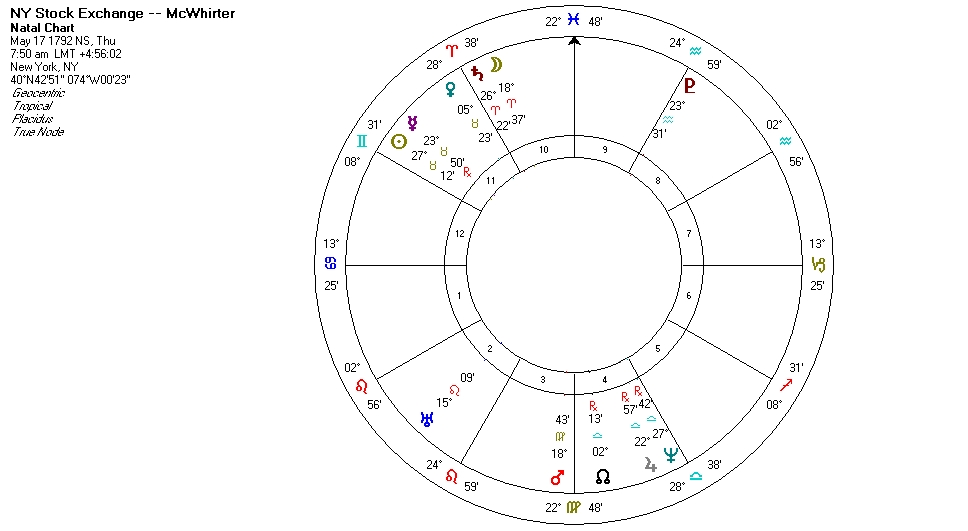
McWhirter rectified the NY Stock Exchange chart, giving it a 14 Cancer Ascendant with 24-1/2 Pisces on the MC and felt that transits to the angles would change the trends in securities, bonds and the general condition of the market. These “secondary factors” could alter the expected nodal cycle movement by up to 20%. Lunations (New Moon charts) compared with the NYSE horoscope will show the trend of the coming month.

Other factors can also throw this business cycle out of its expected rhythm. Transiting Jupiter conjunct the Node or in favorable aspects to Saturn or Uranus may give the markets a boost. Saturn or Uranus in hard aspect to the Nodes should depress prices. The positive or negative aspects between transiting Saturn and Uranus can also be used to forecast major trends. Louise felt that both the signs of Gemini and Cancer related to the United States, so Jupiter in these signs was helpful, while Saturn, Uranus and Pluto here were not.

To forecast for individual stocks, McWhirter utilized incorporation dates and their solar charts. If their natal planets connect to the NYSE chart, we can expect them to follow the general market’s trend. Lunations and outer planet transits to these charts will indicate how the particular company will fare in the coming months and years.

In 1938, McWhirter reiterated Dr. Luke D. Broughton and Evangeline Adams’ cycle for U.S. war with Uranus in Gemini, and correctly forecast that when Saturn and Uranus were in this sign from 1942 to 1944, it suggested “war, depression, government change, social upheaval and a financial panic.”

Louise McWhirter’s methods might not be as effective today as they once were, but they’re based on sound, standard astrology. We can all begin to test them by following the charts for the market and individual companies and studying the transits and lunations to them. As Louise advised, “It takes time and practice to become adept in analyzing the charts of stocks, but it is interesting and very worthwhile because it helps you to obtain financial independence through investment of a sound and practical nature.”

My biographical sketch of Louise McWhirter is here.

McWhirter Theory of Stock Market Forecasting is on Amazon.

Louise McWhirter

Search the web and you’ll find plenty of information on financial astrologer Louise McWhirter, though all of it relates to her 1938 book, McWhirter Theory of Stock Market Forecasting. Her low profile has even led some to speculate she was only a pseudonym for W.D. Gann (a rather sexist theory proposed by a man). But yes, she did exist.

Wikipedia shares information from a family member’s posts on Ancestry.com. Martha Louise McWhirter was born in 1896 in New York City, and we can find additional family information in Census records. Her younger brother was born two years later. Her father, Robert, was from Texas and her mother was from France. By the time Louise was 14, she was living in Maryland, her father had remarried and he was now a gardener and shareholder in a cooperative farm, which must’ve been an unusual situation at that time.

Louise’s parents had divorced and her mother returned to New York, working as a department store clerk. She died when Louise was only 21 years old.

McWhirter married John Mitchell Henry soon after, and the couple settled in Bayonne, New Jersey. They eventually owned their home and had five children – making it obvious why Louise didn’t publish her book until her early 40s. John worked as an assistant engineer at an oil refinery and Louise was a stay-at-home mom. Apparently she used her middle and maiden names for her work for privacy. She had studied the astrology of financial markets for years and one would guess that she made some modest investments herself. Perhaps she did readings for clients.

Evangeline Adams and her teacher Catherine Thompson had used some financial forecasting techniques beginning in the late 1900s. The stock market crash of 1929 brought more interest in predicting the highs and lows of the market. Sepharial and L. Krohn had written a few books on the subject in the ‘teens, W.D. Gann was also writing by that time, and James Mars Langham and L.J. Jensen had published financial astrology texts in the early ‘30s. McWhirter says she originated the New York Stock Exchange chart, and Graham Bates credits her with rectifying it.

We don’t know exactly who Louise’s astrology teachers were. Her home was within commuting distance from Manhattan, where she might have taken classes with one of Evangeline’s former employees like Iris Vorel, Myra Kingsley, Nella Webb or Lynn Wells. Other New York astrologers at the time included Elizabeth Aldrich and Katherine Taylor Craig. Astrologer Juliet Pontin had a home in New Jersey and an office in the city.

McWhirter used the North Nodal cycle, transits and lunations to the NYSE and incorporation charts for long and shorter-term forecasting. She was a Libra with Jupiter in Virgo and her book is a clear and workable instruction manual on how she used astrology to forecast the ups and downs of the markets. As she said, “It is no longer necessary to be wiped out on the Stock Market. That is a sign of ignorance.”

I’ll share more about her book and forecasting methods in a later post.

McWhirter Theory of Stock Market Forecasting is on Amazon.