Author Archives: admin

Andrew Ross Sorkin on Evangeline Adams

Andrew Ross Sorkin, author of the bestselling book Too Big to Fail, takes on the great stock market crash in 1929.  But in his thumbnail sketches of Evangeline Adams and astrology, his research skills completely fail him.
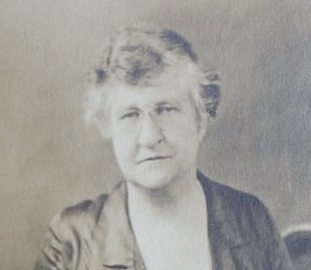
In his introduction, Sorkin claims “more than eight years reporting and thousands of hours of research.”  He’s been writing for the New York Times since high school, has a show on CNBC and edits a financial news service.  But when it comes to Adams and astrology, all he can do is regurgitate questionable bits from a nearly 50-year-old book.  You can’t track down every fact, but the rumors and innuendos are perpetuated.

Astrology is the colorful, sexy subject that many want to laugh at.  Adams is mentioned in over a half dozen online reviews of Sorkin’s book, yet she only plays a tiny role in it.  She was probably included in the press release as a fascinating part of the history.  Sorkin himself compares horoscopes to fortune cookies in an interview, seemingly only aware of Sun sign astrology.

Of course, Andrew Ross Sorkin is an over-achiever who probably had assistants compile much of the information in 1929.  The few short parts on Adams are all directly from The Day the Bubble Burst, a 1979 book about the crash.  In order to look like they did more research on Adams, Sorkin also cites Maury Klein’s 2003 book The Crash of 1929.  But academic Klein also swiped the same skewed anecdotes directly from Bubble Burst.

In both, Evangeline Adams is a regular at the Plaza Hotel dining room, where she “had her own reserved table… surrounded by several star struck young men.”  On September 2, 1929, she predicted on a radio show that “the Dow Jones could climb to heaven,” which it obligingly did.

On Black Thursday, October 24, 1929, Adams held a group session in her office for worried clients, telling them that things were looking up.  She then supposedly contacted her broker, who said she’d lost $100,000 on the market, and told them to sell it all ASAP.

I could verify none of these stories, and much sounded bogus to me.  (Evangeline said she ate lunch at her desk; she was a workaholic with the Moon in the 6th house.)  The original authors gave no specific source notes and were clearly biased against Adams from the start.  Sorkin repeats the same prejudice.  Evangeline made a great forecast, but cared nothing for her clients as long as she could profit from their loss.  The astrologer as charlatan and fraudster is such a tired trope.  How would anyone know how much she had or when she sold?  I don’t even think she owned stocks; she always said her chart was unlucky for speculation (with Cancer on the 5th house and the Moon in the 6th opposite the Sun).

I shouldn’t complain.  Of the 100+ people on Sorkin’s cast of characters list, Evangeline Adams, “astrologist known as the stock market’s seer” (another attribution I could never confirm), is the only woman portrayed in 1929’s exclusive men’s club.

Sorkin, interestingly enough, has the Sun and Moon in Pisces and Mercury and Mars in Aquarius, signs he shares with Adams.  They helped him create a varied and comprehensive story.  His T-square of Mercury conjunct Mars opposite Saturn in Leo and square Uranus in Scorpio has clearly made market crashes a preoccupation.
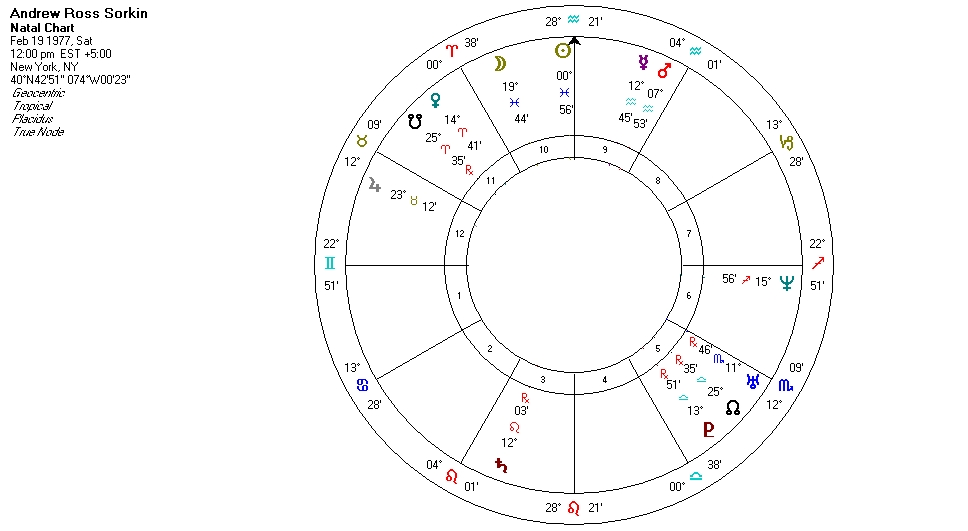
Yet with a grand trine of Venus, Saturn and Neptune, Andrew Ross Sorkin will likely continue on his merrily ignorant way.  Until, of course, the calamitous day there’s a sudden major reversal he can’t explain, leaving him crushed and in need of direction, and ignorant of what astrology could do to help.

Astrologers won’t find anything enlightening on Evangeline Adams or astrology in 1929.  The many other character profiles might help understand their individual horoscopes.  Reviewers compliment the writing, but I personally wonder how such a seemingly intelligent man can be so oblivious to a subject that has become standard in market forecasting.  In this astrologer’s opinion, 1929 is a missed opportunity.

Sorkin’s birth information is from Wikipedia.  We have no time of birth.

For the real story on Evangeline Adams, read my books, Foreseeing the Future and What Evangeline Adams Knew.
Astro Speculation on Wall St.

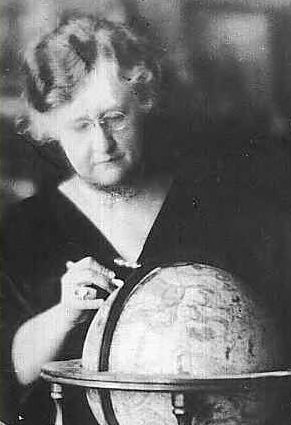
Evangeline Adams’ 1927 autobiography revealed her personal association with financiers like J. Pierpont Morgan and Thomas W. Lawson. She said she could forecast the swings of the market and advise when individuals should invest. In “Astrological Speculation on Wall Street,” Carrie Tirado Bramen explains how Adams shared similar messages with the financial forecasters of her day. Prediction involved both a logical analysis as well as metaphysical hunches or astrological insight.

Bramen presents a fascinating history. The word speculation was first used by Scottish economist Adam Smith in 1791, and like the word consider, “was originally about contemplating celestial matters.” Financial advice literature in Adams’ day sought to separate speculation from gambling by emphasizing rationality, analysis and calculations. They even used charts.

Aquarian Evangeline also tried to normalize her practice, stressing her knowledge, authority and skill. She, too, had great expertise, analyzed data, and presented it in chart form. And yet neither could escape the fact that both also relied on something beyond ordinary rationality: the intuition or impressions.

Bramen asks the question “Who has the authority to predict the future?” Adams agreed with a well-known literary magazine that the clergy, realtors, and stock and bond traders could do so with impunity, but not astrologers. With market forecasting unregulated and in its infancy, and the first female member of the New York Stock Exchange decades away, financiers benefited from Adams’ astrological advice and she from their patronage.

Carrie Tirado Bramen’s academically-written piece reflects a clear understanding of the literature and attitudes of the times, and is full of intriguing connections and historical facts. It’s thought-provoking reading for those interested in the history of astrology in the U.S., especially financial astrology.

“Astrological Speculation on Wall Street” from the Journal of Cultural Economy. (May present a pay-wall.)

More on my biography of Evangeline Adams, Foreseeing the Future.
And my book on Adams’ astrological techniques, What Evangeline Adams Knew.
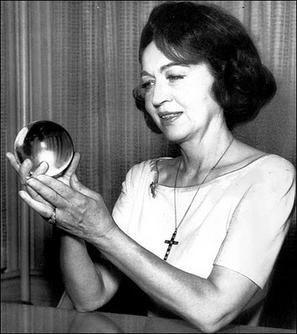
Jeane Dixon

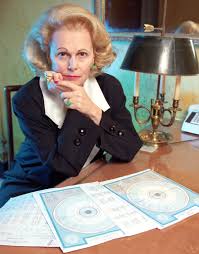
Jeane Dixon was often called an astrologer but was primarily a psychic.  She wrote a daily horoscope column for years, though she used her crystal ball (literally) to get impressions for each sign.

Some of Dixon’s predictions were legendary.  In 1956 she forecast a Democratic presidential win in 1960, but that the president “will be assassinated or die in office” (possibly referencing the 20-year Jupiter-Saturn pattern of deaths in office).  She’d forecast a win for Harry Truman in 1948, when most commentators expected him to lose.

Dixon foresaw a wiretapping scandal for Richard Nixon, though she thought it would “help his image.” Twenty years before Bill Clinton’s impeachment, she could see a president “implicated in misconduct, or worse.”

Jeane Dixon wasn’t always right, but she had some remarkable hits.  She read for Ronald and Nancy Reagan when he was governor of California, and was invited to the White House to meet with Franklin Roosevelt and Nixon.

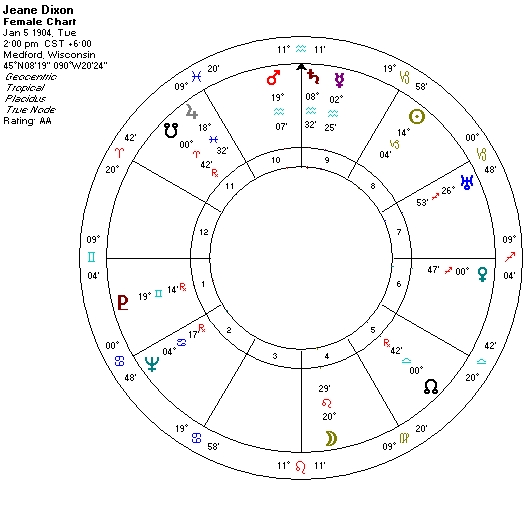
Dixon’s focus on world leaders is shown by her dignified Saturn in Aquarius conjunct her MC; it disposits much of her chart.  Her Gemini Ascendant closely trined Saturn: an immediate connection.  Her reputation was for her unusual Aquarian metaphysical skills, and she was one of the best known psychics in her time with an extremely stable career.

Her Gemini writing ability also popularized her work.  She wrote seven books, including an autobiography, a book on dog horoscopes and an astrological cookbook.  She had a Dial-a-Horoscope service in the mid-1980s, and wrote a quarterly celebrity forecast column for the gossipy supermarket tabloid The Star for over twenty years.

Mercury in Aquarius in the 9th house ruling the Ascendant gave Dixon a wide readership.  Mercury sextiles Venus in Sagittarius in the 6th house, and she seemed to love her work and its divinatory aspects.  Mercury was also inconjunct Neptune in the 2nd and she wrote from inspiration.  She was also a religious Roman Catholic who attended mass every day and felt her talents were divinely inspired.  Dixon believed that all events were foreshadowed and that she was only a messenger.

There’s a wide yod in Jeane Dixon’s chart with Neptune at the apex, and quincunxes to the Mercury-Venus sextile, connecting her Neptunian values with work and her ideals about sharing her message with a wide audience.

Jeane must have enjoyed the spotlight with her Moon in Leo in the 4th house.  She came from a family of ten children, which must have been lively with the Moon’s opposition to Mars, but never had children of her own.  She and her husband partnered in a real estate firm, with the Moon’s ruler, the Sun in Capricorn, placed in the 8th, and associated with business earnings through commissions.

But many of Dixon’s placements also relate to psychic sensitivity.  The Moon’s opposition to Mars would have given her strong impressions, and some of her predictions were spontaneous.  Pluto in her 1st house in Gemini closely trined Mars in Aquarius in her 10th house and sextiled the Moon, giving her deep perceptions that obviously went well beyond what most observed.  A Pluto in Gemini transformation in her life related to her name change from Lydia Pinckert.

The Sun in the 8th is also connected with the metaphysical world.  It sextiles Jupiter in Pisces in the 11th house, making her popular and adding an oracular touch, but Jupiter in this sign also placed Dixon within a religious and spiritual community.

Jeane Dixon died on January 25, 1997 at the age of 93 of a heart attack, in keeping with the Moon in Leo.  A museum dedicated to her life and work opened in 2002, but only lasted about six years.

Jeane’s bio on Wikipedia.   Astrodatabank rates her birth data AA.

About the Jeane Dixon Museum

Dixon’s autobiography, My Life and Prophecies.


Joan Quigley and the Reagans

1988 was a great time to be an astrologer.  Nancy Reagan’s use of astrology in the White House was suddenly revealed to the public, and it was big news.

Former chief of staff Don Regan’s memoir came out in early May, and the press leapt on the news.  It was no surprise to astrologers, who were aware that the Reagans had consulted Carroll Righter and other astrologers during their Hollywood years.  Don Regan didn’t know the identity of the San Francisco astrologer that the First Lady used, but the press soon found out:  Joan Quigley, who Nancy may have consulted as early as the early ‘70s.

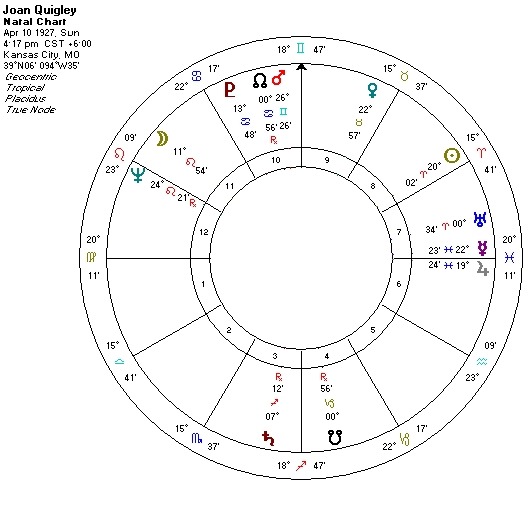
Quigley was the daughter of a successful hotel owner, and she and her sister grew up in a penthouse and were featured in the society pages attending events and charitable functions.  We can see her inherited wealth and social standing in her Aries Sun in the 8th house trine her Moon in Leo in the 11th.  With a Virgo Ascendant, she was attractive and always perfectly dressed, seemingly without a hair out of place.  Joan graduated with an art history degree from Vassar College.  Her Ascendant closely trined Venus in Taurus, so she had good taste.

After college, Joan returned to San Francisco, where she started practicing astrology and continued volunteer work.  Her Venus in the 9th showed her attraction to art studies, and since it also ruled her second house of income, her ability to earn through sharing her astrological knowledge.

She was choosy about her clients since she didn’t need the income.  Her Moon also trined Saturn in Sagittarius in her 3rd house; while she published three books, the first, Astrology for Adults (1971) very much used Evangeline Adams’ 1930 book Astrology: Your Place Among the Stars as a direct source.

Quigley’s Mars and Pluto were in the 10th house and her focus was on her career.  Mars squares both Mercury and Uranus in the 7th, attesting to the short-term nature of consultations.  She never married, probably a good choice as she needed freedom in relationships.  The 7th also shows her clientele and public outreach.  Jupiter in its own sign of Pisces, closely conjunct the 7th house cusp, added to her independent spirit, as well as her ability to come before the public.  Quigley made regular appearances on the Merv Griffin show and he was probably a client.  Though with Pluto in Cancer in the 10th and Saturn in the 3rd, the astrologer was discreet and typically didn’t reveal anything about her clients.

Jupiter also shows that Quigley could serve some notable patrons.  She had volunteered for Ronald Reagan’s campaigns for California governor and then president.  After the assassination attempt on President Reagan on March 30, 1981, Nancy began to rely on Joan regularly.

Quigley was 54 years old at the time.  Her progressed Jupiter conjoined 7th house Uranus, opening her to an unusual relationship.  Her progressed Midheaven conjoined her natal Moon in Leo in the 11th, nicely describing her association with a regal kind of woman, and she was also experiencing a lunar return.  Joan’s Mercury had progressed to her 10th house, and was a few degrees from conjoining her North Node and squaring natal Uranus.

Pluto transited her 2nd house of finances and values at 23-1/2 Libra, equidistant from a trine to 10th house Mars and opposition to her 8th house Sun, showing a rewarding career opportunity.  Neptune through her 4th house trined her natal Neptune in the 12th, and she was hired as a consultant and counselor, but had to keep it secret.  The Jupiter-Saturn conjunction in early Libra that had foreshadowed the assassination attempt on the president was transiting Quigley’s first house, so a long-term (Saturn) partner (natal Jupiter conjunct her 7th) had come to her (first house).  Both exactly opposed natal 7th house Uranus within a few months, bringing a new relationship.

Quigley’s Mercury in Pisces and Uranus in Aries in the 7th house square Mars in Gemini in her 10th shows the potential for sudden upheavals in relationships from time to time.  The pattern suited Joan’s consulting work with Nancy, especially as they did it remotely, by telephone (Uranus).

When the news broke in early May of 1988 about Joan Quigley’s influence on President Reagan’s schedule, transiting Saturn and Uranus were closely conjunct in Capricorn and squared her 7th house Uranus, creating a break.  Of course, her seven-year stint represents a Saturn cycle, and the relationship had begun when Saturn conjoined Jupiter and both opposed her Uranus.  Transiting Pluto in Scorpio through her 3rd house was less than a degree from squaring her Moon:  the relationship with the powerful First Lady had ended.  Quigley said that Nancy only spoke with her once after the public got the news.

Nancy Reagan couldn’t deny what had happened, but distanced herself from astrology, describing her use of it out of fear.  Joan Quigley felt compelled to speak out, and later write her own book, where she detailed her influence on the Reagan administration, including encouraging the president to work with Soviet president Mikhail Gorbachev on arms control agreements and ending the Cold War.

Some astrologers felt that Quigley had betrayed a confidence.  Her leonine integrity and dignity had been questioned, and she wanted all to know what astrology could really do.  With five planets in fire signs and an angular Mercury and Jupiter, she shared her truth.

Quigley’s book on the Reagans has interesting facts, but her ego comes off a little strong.   What does Joan Say?  My Seven Years as White House Astrologer to Nancy and Ronald Reagan.

Roger Bacon and Incorruptibility

Meagan S. Allen’s book Roger Bacon and the Incorruptible Human, 1220-1292: Alchemy, Pharmacology and the Desire to Prolong Life shows how alchemy, astrology and medicine were interconnected in the medieval world.  Roger Bacon was a 13th century philosopher and Franciscan friar, who, like many others of the time, was influenced by both the Bible and medical works, and believed that the extension of life was a valid pursuit.

Allen explains Bacon’s ideas in a consistently clear and lucid style. And while she mentions astronomy much more than astrology, at that time they were a united subject.  But given the context, it seems to me that the astrological meaning is generally intended.

Adam and Eve were given the potential to live forever, eating the fruit of the Tree of Life in Eden, which would sustain them forever.  But eating from the Tree of Knowledge, they had to leave.  And human bodies have lost their balance compared with the much longer life spans of the biblical patriarchs.

Our bodies will eventually be incorruptible through God after the resurrection, and a physical resurrection that included both body and soul was the accepted idea.  There would then be no tension between them, as both would be completely subject to the soul’s will.

Bacon was familiar with astrological works by Arabic authors like Abu Ma’shar and al-Kindi, and Greek works such as Ptolemy’s Tetrabiblos. Many texts attributed to Galen had also been translated into Latin by that time.

Not unlike today, the medical establishment offered little help for the aging process, since their focus was on disease.  People could support their health with an improved diet and natural remedies that might help extend life (prolongatio vitae).  And Bacon felt there were risks to relying on medical advice.  Prescriptions needed to suit one’s age, constitution and horoscope, but doctors often weren’t good astrologers, alchemists, diagnosticians or apothecaries.  Without these skills, treatment was left to guesswork and luck.

Lunar aspects should be considered when taking medicines, and herbs needed to be collected at the proper times.  Helpful astrological patterns could pass celestial virtues onto alchemical medicines.  Alchemical techniques (which might be termed astrological magic today) could also enhance food and stones to bring one back to health and prolong life.

The ideal was a corpus equale – a body with the elements in equal proportions, which was so balanced that it would be incapable of decay (as gold and the immortal resurrection body).  Like everything else in the universe, stars and planets were made up of four essential elements and simple humors:  sanguine blood (air), phlegm (water), choler (fire) and melancholy (earth).  Our natal horoscopes give each of us differing elemental balances.  The challenge, then, or the “secret of secrets” (secretum secretorum) lies in balancing out the qualities of the humors in the body.

A thousand years earlier, Galen and Hippocrates’ medicine also based human health on the balance of the four humors.  As medical astrology still does today, alchemy was built on this foundation.

Bacon felt that the theory of the transmutation and purification of metals could be applied to human medicine, and that alchemical medicines could theoretically help us approach immortality.  A universal health elixir would be perfectly balanced and therefore incorruptible, able to restore bodies to health.  Bacon claimed he had seen it work with skilled doctors and patients.

Meagan Allen even shares the recipe, which included a combination of honey, fruit, seeds, spices and flowers, all fermented and boiled down with various powdered gem stones and gold, and placed “under the sky” for a week or so to take advantage of the “heavenly powers.”  Other key ingredients could include the flesh and bones of the Ethiopian dragon (a large winged snake) and the Tyrian viper – which was good for old age and aided memory.

And best of all, no one need worry about a diagnosis, since the elixir had a universal nature that cured anything.  A panacea, it did not require a diagnosis, and would balance humors, lessen pain, clear vision, calm disease and slow aging, support the brain, stimulate joy and prolong life.

Those interested in medical astrology, the medieval mind or alchemy’s connection with the cosmos should enjoy reading Roger Bacon and the Incorruptible Human, a well-researched and abundantly annotated work.  Since Meagan S. Allen is a college professor, her book is another example of how ancient and medieval world views that support astrology continue to be legitimately explored today.

As an academic book, Roger Bacon and the Incorruptible Human is unfortunately rather expensive.

About my reviews and links.

An Explosive Horary

Washington, D.C. astrologer Barbara Watters included a chart in her Horary Astrology book for an employee accepting a job with a less than ideal chart for the offer.  It was her husband, James W. Watters, and he died in a lab explosion on the job when he was 59.

We don’t have his time of birth, but he was born on May 23, 1909 in Selma, Alabama.  He was a civilian employee working on an experiment in rocket fuel combustion for the Navy.  We can see his work with potentially dangerous materials in his Sun-Mars-Jupiter T-square.  He must have been very quick and bright with the Sun also in Gemini, but I’ve personally found that Mars-Jupiter oppositions can be somewhat clumsy or accident prone.  James had Jupiter in careful Virgo which probably had alleviated the tendency somewhat. 

He had another T-square with Saturn in Aries squaring Uranus in Capricorn and Neptune in Cancer, and while this could indicate expertise and innovation, it, too, might also symbolize the need to take care with noxious chemicals (Neptune) or potentially combustible materials (Uranus).  The Moon in Cancer may also be involved in the pattern, which could impact his physical health more strongly.

The only flowing aspects in the chart are Mercury conjunct Pluto in Gemini, both trine Mars, another pattern that may suggest dangerous situations.  Though he must have had a strong analytical mind and good research skills (he had a PhD).  Ultimately, the potential for a life threatening accident is in his birth chart (though of course we don’t have his time of birth).

James held the job for eight years, so the horary worked well for some time.  The chart is set for the time when he opened the letter with the offer, after months of searching.  He’d already rejected three previous offers due to “hopelessly bad charts.”  He’d been “critically ill” with a “serious infection” and didn’t start work for several months.

Sagittarius rising and Jupiter in the 1st house represent James, since he had initiated the job search, and the Sun will sextile Jupiter, so he got the job.  The position itself is ruled by Venus in the 12th (ruling the 6th of work), and the Moon in the 8th house is about to trine it.  Barbara associated these in the horary with secrets, and the work demanded a top secret security clearance, which James had.  (I’d guess that some of his natal planets were also in the 8th and 12th to do this type of work.)

Barbara didn’t like the Mars opposite Saturn, which she thought could create some “serious difficulties.”  After the eight years, James developed some friction with his immediate supervisors, and started looking for another job.  Not long after, he and a colleague were killed in the explosion on January 23, 1968.  The fire only did minor damage to the lab.  In her 1973 book, Barbara said that nothing about the cause of the explosion was ever revealed.

She felt that the timing in the horary was indicated by solar arc Mars conjoining the Moon (his dissatisfaction) and squaring the Sun (the accident).  She often found the Nodes to be sensitive degrees, that any planet in the same degree in the horary was a “fateful testimony,” sometimes connected with an actual fatality.  Mercury closely squares the Nodes.  Pluto also squares the Ascendant/Descendant axis.

I might have considered James the 7th house, since the offer was initiated by the Navy.  In that case, he was represented by Mercury, which seems a more obvious indication of what occurred.  Whatever rules we use, Jupiter in Sagittarius also doesn’t seem like a weak, recuperating man to me.

At 59, James was experiencing his Jupiter return, which had also just squared his Sun and Mars, interesting due to the emphasis on Jupiter in the horary, and the issues with Jupiter in detriment as part of the natal T-square.  Jupiter can certainly be explosive.  Saturn would only return later in the year.  Transiting Neptune in Scorpio squared his Mars, and Pluto in Virgo was within a degree of squaring natal Mercury, reiterating Pluto’s squares in the horary.

These charts make me wonder about the role of fate and free will.  If James hadn’t accepted the offer, or the Navy hadn’t been so patient about delaying his employment, what would have happened?  Could he have died in an explosion in a different research lab?  How long does a horary answer last, and how influential could it be?  And I wonder how much Barbara really saw in the chart, since she identified James with Jupiter rising.

James’ birthday on May 23, 1909 is from FindAGrave.com.

The horary is on page 130 in Watters’ Horary Astrology, which has been republished by the AFA.

About my reviews and links.


Genesis of a Scoop

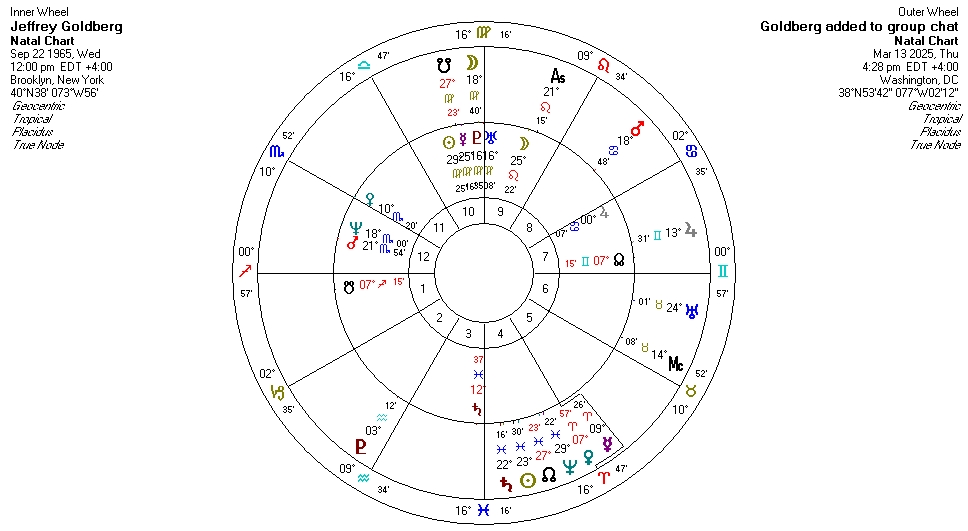
On March 11, 2025, Jeffrey Goldberg, the editor of The Atlantic magazine, a left-leaning publication, received an invitation to a Signal group chat from U.S. national security advisor Mike Waltz.  On March 13, on the verge of a total lunar eclipse, he was added to the group.  Surprised it wasn’t a hoax, Goldberg read text discussions by top national security officials about a planned attack on Houthis in Yemen.  To his surprise, he found it was real on March 15, when the attacks were carried out on schedule.

How was the journalist privy to the news?  Of course Mercury was about to turn retrograde.  And the eclipse at 24 Virgo was right on Goldberg’s Sun and Mercury.  But there are many other astrological correlations.

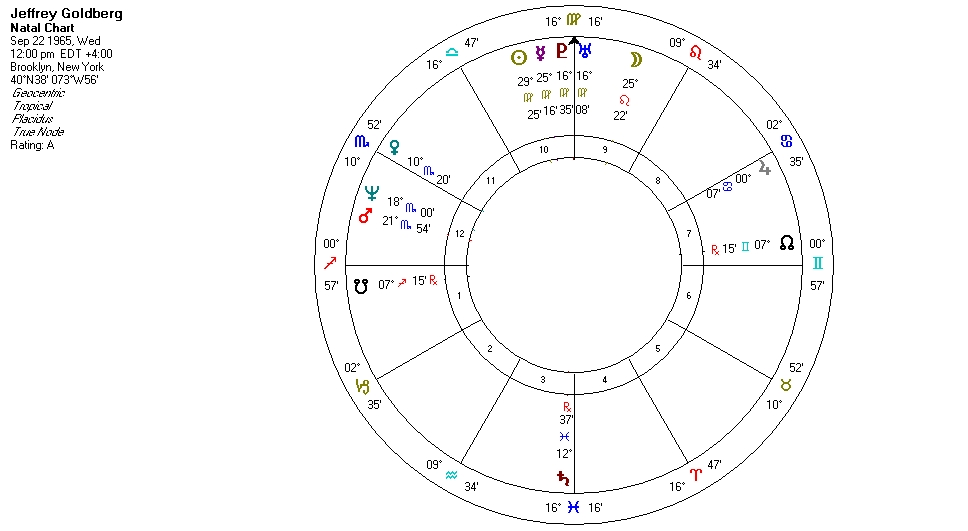
Jeffrey Goldberg was born on September 22, 1965 according to Google, in a tumultuous year featuring Saturn in Pisces opposite the Uranus-Pluto conjunction in Virgo.  People born in 1965 may be faced with instability and even upheavals in their lives from time to time.  And Saturn is a singleton the editor’s chart, making its influence more important in timing and events.

Goldberg’s Sun and Mercury in Virgo are classic placements for a reporter, writer and editor who needs to communicate the facts.  (We don’t have a time of birth, but the Sun is in Virgo all day.)  Jupiter in Cancer, the sign of its exaltation, is also an excellent placement for publishing, helping him assertively reach out for news as it squares his Sun.  Venus, Mars and Neptune are all in Scorpio, known for research and ferreting out the truth.  Mars conjunct Neptune sextiles the Virgo planets, and Venus trines Saturn.  So there is some interference with the major oppositions, with outlets for the opposition energies.  Goldberg’s Moon is in Leo, giving him a sense of pride and more leadership ability than all the Virgo placements might suggest.  In interviews, he gives a low-key, matter-of-fact Virgo report with a dignified Leo presentation.

The events that unfolded are a good example of hard aspects activating events.  We wouldn’t have necessarily thought they were “lucky,” but they proved to be so for the journalist.  Goldberg was added to the chat group on March 13 at 4:28 p.m. according to USA Today’s timeline.  Aside from the eclipse, the transiting Ascendant squared his Mars and conjoined his Moon, allowing him entry.  Jupiter in Gemini squared his natal Saturn-Uranus-Pluto oppositions, creating a big story.

Transiting Saturn had recently trined the editor’s Mars and opposed his Mercury and Sun; certainly his experience and long time in the industry were responsible for his phone number being on Mike Walz’s list in the first place (nearly 60, Goldberg recently experienced his second Saturn return).  Neptune also nearly exactly opposed his Sun (3 minutes approaching), and this certainly represented an error but also a revelation.  (Natal Neptune has mainly flowing aspects.)

But as a startling and unexpected story, we have to look to Uranus.  Transiting Uranus was close to trining Goldberg’s dignified Mercury, with a boost from Mars in Cancer, which trined his Scorpio planets and sextiled his Uranus and Pluto in Virgo.

It’s nice that so many tried-and-true astrological themes are present in this story.  But it’s even more interesting to see how Goldberg’s natal planets were activated by hard aspects, perfectly in keeping with appropriate astrological motifs, but in a way that perhaps we wouldn’t have exactly forecast.  Then again, Uranus isn’t called unpredictable for nothing!

Goods of the Dead

I always feel that Evangeline Adams introduced me to genealogy.  Her Pluto conjoined my Moon, and as I researched her life, I uncovered many government and church records that provided key information about her.  After that, I more easily researched other families as well as my own.  Pluto unearths things and can be relentless in its action.  It kept me focused on genealogy research for a long time.

The National Archives had their records center on Varick Street in downtown Manhattan in the 1990s, and I spent some time there.  It was a quiet, library-like setting with helpful clerks.  You’d first search for a name in Soundex listings, which phonetically accommodated different spellings.  That would lead you to particular Census records, all originals scanned onto microfilm.  As I scrolled through the wide microfilm rolls on the big old microfilm viewing machine, it was exciting to find Evangeline and her family in Andover in 1890 and Boston in 1900 Census records.

Chatting with an adopted woman who was searching for her birth parents, I realized that I could find my own family records, too.  I returned another day to find my father’s family in Manhattan and Brooklyn and my mother’s in central New York in the early 20th century.

With home-loving Cancer on my fourth house cusp and its ruler, the Moon, prominent in the first, I’ve always found family stories compelling.  But I think that Saturn in the 9th trine my Ascendant gives me the ability to find old records.  To my mind, Saturn, ruling old things and permanence, as well as the Moon, are key significators for genealogy.

I still remember an old astrology book describing Saturn careers having to do with “goods of the dead,” one of those ultra-specific key phrases that left me shaking my head.  It wasn’t until I was in my forties that I took a part-time job with an estate lawyer.  He had Saturn in Cancer and handled wills and court proceedings for heirs,  marshaled decedents’ assets and distributed them.  Goods of the dead, I realized one day with a start.

But the best part of the job for me was access to Ancestry.com, which helped us create family trees and prove family relationships in court.  I did much of the genealogical research for many estates over fifteen-plus years, regularly proving ancestry to first cousins of the decedents.

I was in the Kings County Surrogate’s Court record room one day waiting for the clerks to bring me another old file, when I realized that some of my own ancestors’ records might be there, too.  Transiting Pluto was close to conjoining my Saturn at the time, and it opened up an entirely new set of records to me.  I quickly looked in the old fashioned card catalog and found the index card that was created when my great-grandfather died in 1936, and the clerks pulled the file.  My grandfather had been the executor, and it was fascinating to see the will, so similar in language and format to that used today, with all of my grandfather’s siblings’ information and releases included.  Saturn also relates to consistency and tradition, which still exists in many court papers and proceedings.

Saturn rules our ancestors, and the Moon relates to our family connections.  Both also have to do with cemeteries, another wonderful place to dig up family history.  We found a photo of my great-grandmother on the family monument she had purchased 100 years ago in Holy Cross cemetery in Flatbush, just a few miles away.

These, too, are what they used to call “goods of the dead.”  Some of the old associations are still valid today.

The Astrology of Bond

I’m definitely not a James Bond fan, but I really enjoyed The Astrology of Bond.  Why?  It’s the astrology!  Hollywood astrologer Ra Rishikavi Raghudas has given us lots of charts, with well-drawn interpretations that only someone who’s spent a lifetime practicing astrology can do.  And I no longer see many in-depth horoscope portraits elsewhere, making this book valuable indeed.

The Astrology of Bond cover blurb says it’s “suitable even for those with little or no astrological knowledge,” and while there are clear explanations throughout and much of a non-astrological nature, I personally think readers should have the basics to best appreciate the book.

Ra has done a tremendous amount of research and I especially enjoyed reading about the history and back story of the Bond works.  We’re treated to the horoscopes of Queen Elizabeth’s astrologer Dr. John Dee, Rudolf Hess (yes, he’s connected), creator Ian Fleming, his mentors, his wife, the American ornithologist whose name was borrowed for the character, the producers, all of the actors who played the title role and more.  For film and electional astrology buffs, all of the horoscopes for the movie premieres are included too.

I also found the section on the alchemical myths that relate to the Bond story fascinating, as well as Fleming’s friends in occult circles (and their horoscopes).  It’s ironic how such a self-destructive man as Ian Fleming (who died at 56 from a heart attack due to chain smoking, drinking and a generally unhealthy lifestyle) created what became a seemingly indestructible man.

Ra is living in the 21st century, and while James Bond may have been an old-school, misogynistic alpha-male, the writer certainly is not, and also considers the shifting cultural climate and how the series adapted to succeed throughout the years.  He also notes the 1962 Solar Eclipse in Aquarius (with seven planets in that sign) and the Uranus-Pluto conjunction of the 1960s as initiating the new social norms that helped the Bond archetype take root.

Ra Rishikavi Raghudas is a seasoned astrologer who brings a depth of experience to his book.  He’s a wonderful writer with an easily accessible style, who presents sound, solid astrology while also touching on many tools to use and ways to look at a chart.  If you’re an astrologer who’s interested in film or its history, you’ll enjoy this fun and informative book.  But if, like me, you crave compelling horoscope interpretations of real people and events, you’ll find much more.

See The Astrology of Bond on Amazon.

About my reviews and links.

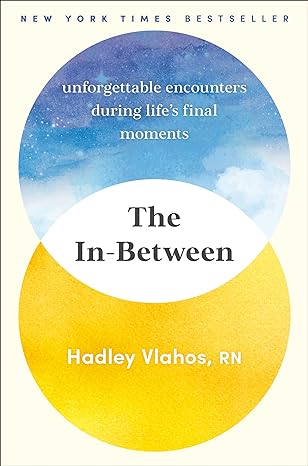
The In-Between

When my mother first moved to an assisted living facility, they placed her under hospice care.  Being the stubborn and contrary person that she was, she fought them every step of the way until they disenrolled her (she lived for five more years).  We weren’t sure why she was put on that plan, but I ended up feeling it was a very good program that was more holistic than most medical treatment today.

So my interest was piqued when I saw The In-Between:  Unforgettable Encounters During Life’s Final Moments, a memoir written by a hospice nurse, about her experiences with twelve patients over the course of a few years.  Most interesting to me was the medical reality of patients receiving visits from their loved ones as they neared death.

The author, Hadley Vlohos, R.N., was a teenage unwed mother when she enrolled in nursing school and later landed in hospice care.  She felt at home with the more patient-centered, comfort-driven mandate of hospice.  Hadley shares what she learned from her patients, who were usually open and candid at the end of their lives.  We follow her on her journey as she acclimates herself to the challenges of her job, gets married, goes through the death of her mother-in-law from brain cancer and learns to confront medical authorities when necessary.  Her patients range from wealthy to homeless, elderly with dementia to a young parent, slow and expected weakening to quick passages, and all offered insights and wisdom.

But it’s the unusual relationships that develop, as well as the metaphysical experiences described that were the most compelling.  Patients invariably felt calm and peaceful near the end, and many looked forward to rejoining long departed family members who had recently visited them.  Hadley herself had struggled with her religious upbringing, and she found that beliefs didn’t affect her patients’ experiences in dying.  (Even a life-time atheist was also visited by family from the other side.)

While the topic may be off-putting to many, Hadley Vlahos tells her patients’ stories with great feeling and empathy, and the book becomes a celebration of life in all its many facets.  Hadley learned that she couldn’t control everything and often had to trust both her patients and the universe and let go.  (Saturn is often invoked in the subject of death, but may also be appropriate in its sense of timing and the idea of release, too.)  All of the patients’ stories resonated with me.  In an age of AI and continual promotions, it’s nice to find a work that honors uniquely human experiences.

See The In-Between on Amazon.com.

About my reviews and links.